
Emerging from the sun-drenched shores of the ancient Levant, the Phoenicians cast a long and enigmatic shadow across the pages of history. Their legacy whispers in the rustle of trade winds, in the clink of coins bearing cryptic symbols, and in the very alphabet that shapes our words. But who were these people, these “Masters of the Mediterranean,” and how did their civilization rise from the sands of time to leave such an indelible mark on the world?
Unraveling the Phoenician story is akin to piecing together a mosaic. Primary sources, like scattered tesserae, offer glimpses into their world, painted in the languages of their rivals and etched in the stones of their vanished cities. Archaeological discoveries breathe life into these fragments, revealing the pulse of daily life, the grandeur of temples, and the secrets buried beneath the waves.
Firstly, let us dispel a misconception: “Phoenician” was not a term they used for themselves. It was a label bestowed by the Greeks, possibly referencing their famed purple dye, extracted from a sea snail called the murex. Their own word for themselves might have been “Cana’ani,” linking them to the broader Canaanite civilization of the Bronze Age.
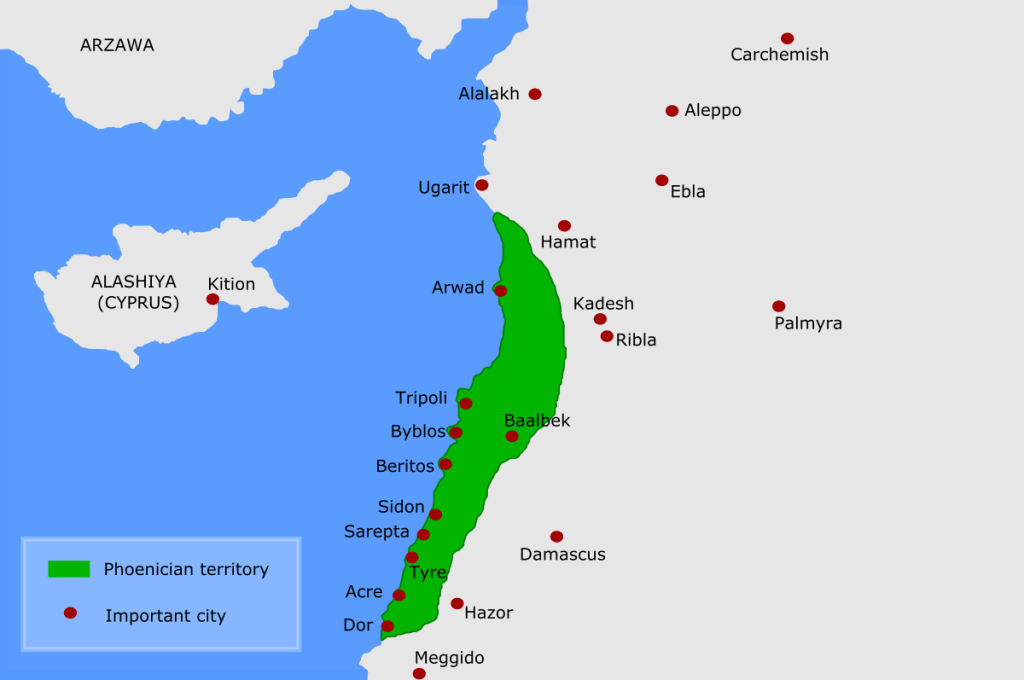
By the mid-2nd millennium BC, several independent city-states, like Tyre, Sidon, Byblos, and Arwad, dotted the Levantine coast. These vibrant metropolises thrived on trade, fueled by their strategic location at the crossroads of ancient empires. Texts from Egypt and Mesopotamia mention them as skilled shipbuilders, purveyors of luxury goods, and savvy merchants.
Archaeological excavations in Byblos, the “oldest city in the world,” unveil the Phoenicians’ deep roots. Monumental temples dedicated to the fertility goddess Asherah and the storm god Baal rise from the earth, adorned with intricate carvings and bearing witness to rituals that echoed for millennia. Tombs like those at Sidon whisper tales of wealth and power, showcasing elaborately painted sarcophagi and golden funerary ornaments.
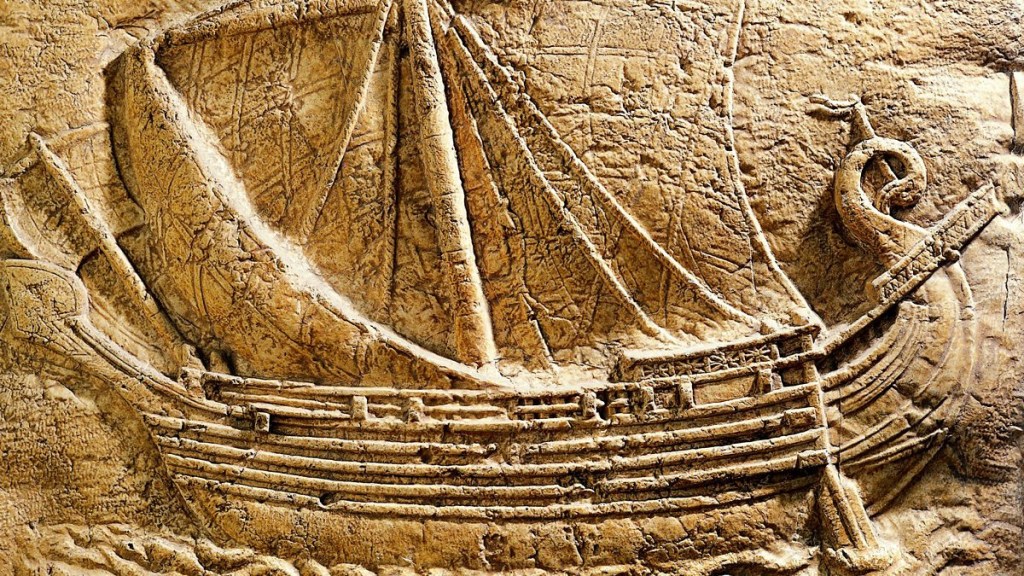
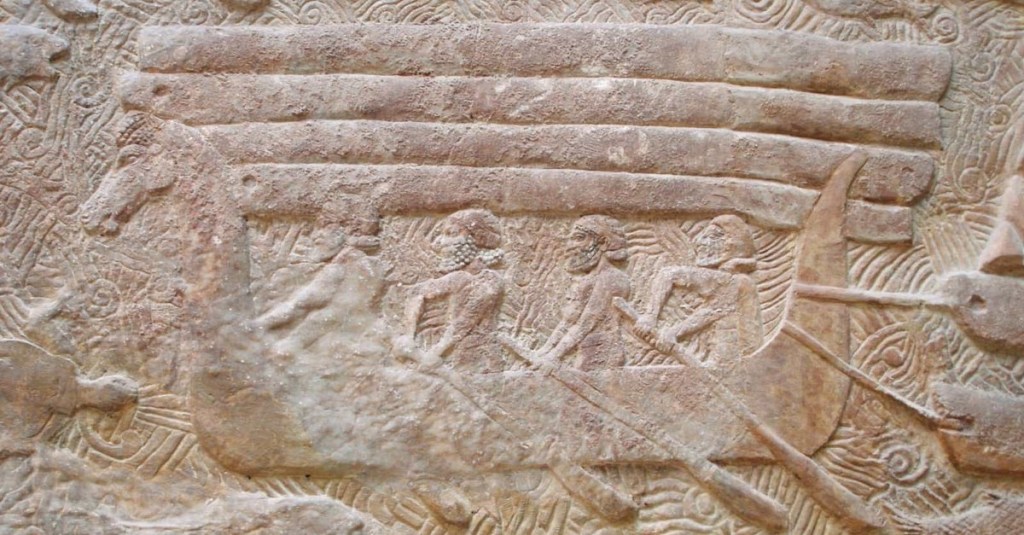
But the Phoenicians were not merely landlubbers. Their true calling lay in the embrace of the sea. Their shipyards, once teeming with activity, crafted sturdy galleys, the biremes, propelled by both oars and sails. These vessels sliced through the waves, venturing far beyond the familiar horizon.
Texts like the Greek epic poem, the Odyssey, depict Phoenician traders traversing the Mediterranean, bartering ivory, papyrus, and precious metals. Their colonies sprung up along the coasts of North Africa, Spain, and even Sardinia, carrying their culture and commerce to distant shores. Carthage, their most celebrated offspring, blossomed into a formidable maritime power, rivaling Rome itself.
But the Phoenicians’ legacy extends beyond trade. Their most enduring gift to humanity is the alphabet. Around 1000 BC, they streamlined the cumbersome Egyptian hieroglyphs into a simpler system of 22 phonetic letters. This revolutionary invention, readily adapted by the Greeks and later the Romans, became the foundation of most writing systems used today, including our own.
Yet, despite their achievements, the Phoenicians remain shrouded in a degree of mystery. Their own written records, primarily on papyrus, have not survived to the modern day. We glimpse their beliefs through the lens of their neighbors, often portrayed as ruthless traders and bloodthirsty gods. Deciphering their language, Punic, is an ongoing puzzle, offering tantalizing hints of their daily lives and social structures.
In conclusion, the story of the Phoenicians is a testament to the enduring power of human ingenuity and adaptation. From humble beginnings as coastal traders, they built a maritime empire that reshaped the ancient world. Their legacy lives on in the bustling ports they founded, the alphabet that shapes our thoughts to this day, and the spirit of exploration that continues to propel us across uncharted waters. As we continue to excavate their secrets, the enigmatic Phoenicians remind us that even the whispers of the past can hold the echoes of a civilization’s greatness.
Primary Sources Cited:
- The Amarna Letters: Diplomatic correspondence between Egypt and Canaanite city-states during the Bronze Age.
- The Homeric epics: The Iliad and the Odyssey offer glimpses into Phoenician trade and culture through Greek eyes.
- The Bible: Mentions of Phoenicians,particularly in the Old Testament,provide insights into their interactions with the Israelites.
- Archaeological discoveries: Excavations in Phoenician cities like Byblos, Sidon, and Carthage have unearthed a wealth of material,including temples, tombs, artifacts,and inscriptions.
References:
- “The Phoenicians” by Jonathan Tubb
- “The Phoenicians and the West” by Maria Eugenia Aubet
- “Carthage: The Republic of Hannibal” by Serge Lancel

 LazyHistorian Unknown
Leave a comment