
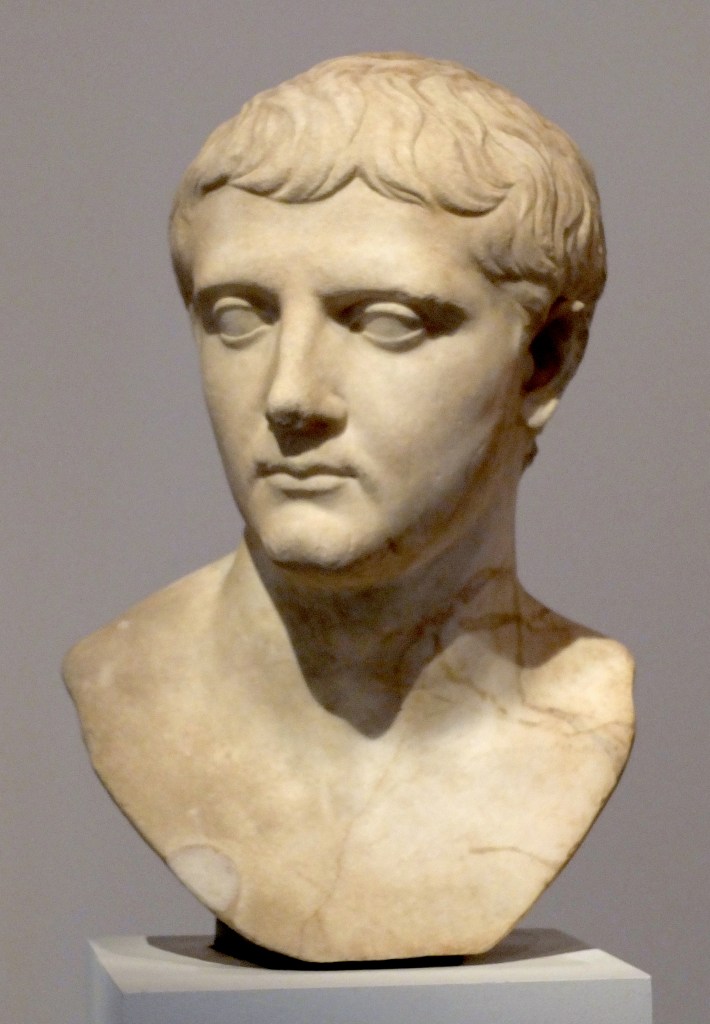
Nero Claudius Drusus, often relegated to the periphery of Julio-Claudian narratives as “Tiberius’ brother,” demands a bolder brushstroke on the canvas of history. His vibrant, albeit truncated, life transcends the label of mere appendage. Drusus was, in truth, a sculptor of shadows, shaping the dynasty’s ascent with a potent blend of military brilliance, political finesse, and strategic familial ties.
His campaigns etched his name onto the map of Germania in crimson hues. Spearheading audacious thrusts across the Rhine, Drusus tamed Suebi and Cherusci, pushing the frontiers to the Elbe – a feat immortalized in the cognomen “Germanicus,” echoing through generations. These victories were not mere territorial trophies; they secured Rome’s northern flank, enriched the coffers with spoils, and, crucially, established Drusus as a potential Augustus-in-the-making, eclipsing even his own brother in renown.
Velleius Paterculus, a Roman historian, extols Drusus’ military prowess: “He crossed the Rhine not once, but often, not on rafts or by stealth, but in broad daylight and with a mighty array of troops… He inflicted heavy losses on the Germans, ravaged their country, and erected forts…” (Velleius Paterculus, Roman History 2.97)
But Drusus wielded more than the gladius. His consulship, imbued with populist policies like land distribution and infrastructure development, garnered him the adoration of the plebs, weaving a vital thread of popular support into the Julio-Claudian tapestry. His marriage to Antonia Minor, Augustus’ niece, further bolstered the dynasty’s internal cohesion, forging a familial nexus that would bear imperial fruit in Germanicus and Claudius.
Suetonius, another Roman historian, highlights Drusus’ political acumen: “He was a man of remarkable ability and energy, and of great popularity with the people… He was also much beloved by the soldiers, not only for his courage and liberality, but also for his pleasantness and affability.” (Suetonius, The Twelve Caesars: Tiberius 4)
Drusus’ relationship with both Augustus and Tiberius deserves a nuanced examination. Though raised alongside Tiberius in Claudius Nero’s household, a childhood forged in shared laughter and youthful scrapes, their bond was not without tension. It was Augustus who recognized Drusus’ potential, adopting him into the Julian house and placing him in direct line for succession, potentially casting Tiberius into the shadows. This intricate dynamic, a dance of fraternal affection and dynastic ambition, played out against the backdrop of their father’s tumultuous fall from grace, adding another layer of complexity to their connection.
Tacitus, the Roman historian, hints at the potential rivalry between Drusus and Tiberius: “Drusus, with his youthful vigour and the favour of the populace, seemed destined for greater things; and Tiberius, in consequence, was tormented by jealousy and anxiety.” (Tacitus, Annals 1.33)
Yet, Drusus remained a loyal lieutenant to Augustus, his military conquests contributing to the Pax Romana and solidifying the emperor’s legacy. His political acumen, often surpassing Tiberius’, earned him favor with the Senate and the people, further complicating the dynastic calculus. Whispers of intrigue swirled around Drusus’ sudden demise from a fall from a horse in 9 BC, fueling speculation of foul play orchestrated by a jealous brother (Pliny the Elder).
His legacy, though tragically cut short, extends far beyond his own deeds. He laid the groundwork for future Germanic campaigns, his innovative tactics – canals, bridges – paving the way for his son’s exploits. His political touch fostered stability, his populist moves secured crucial support, and his dynastic maneuvering ensured the Julio-Claudian bloodline’s seamless succession.
Drusus’ life, then, is not merely a footnote in dynastic chronicles. He was a sculptor, shaping the Julio-Claudian legacy with every campaign, every policy, every familial bond. His story compels us to move beyond the emperors’ dazzling light and illuminate the figures in the shadows – the architects whose silent contributions shape the grand narratives of history. He was brother, son, general, and, above all, a sculptor of power in the twilight of the Republic and the dawn of the Julio-Claudian dynasty.

 LazyHistorian Unknown
Leave a comment