
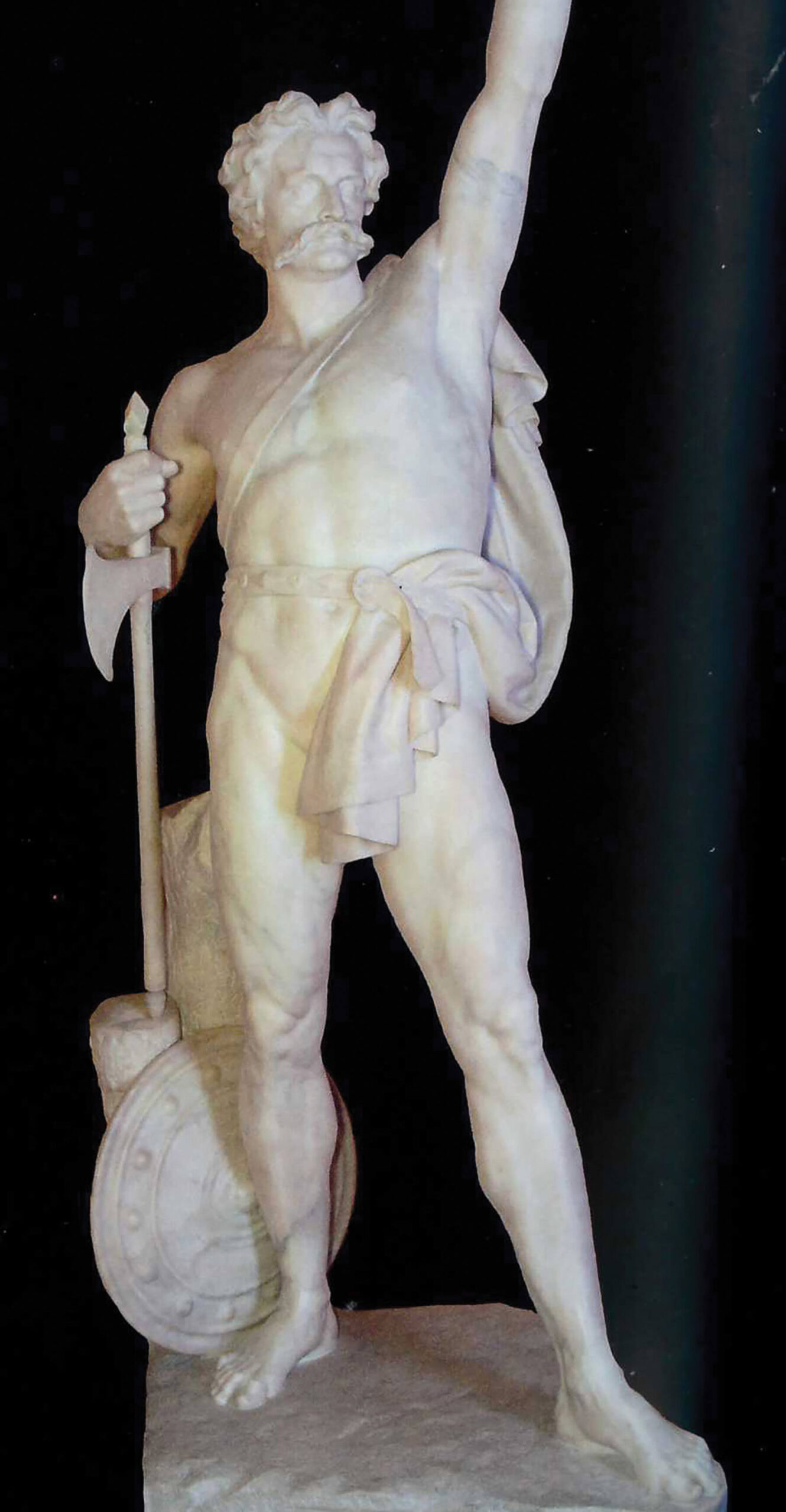
In 43 AD the Emperor Claudius set his sights on finishing what his great great granduncle Julius Caesar had started nearly a century previously, the Roman conquest of Britain. Since Caesar’s first abortive invasion of the island, relations between the Roman province and the island had recovered and even flourished.
Economically, strong trade networks formed and flourished across the channel as highly valued commodities (such as tin and wine) were exchanged. Political ties between the social elite of the southern British and Rome were also prevalent in this period. During his time in Britain, Julius Caesar had established a status quo of tribute, hostages and client states in the south of the island that had largely remained in tack until the time of Claudius.
The Rome’s invasion was, in part, set in motion by the presence of disenfranchised British nobles exiled to the Roman court. One such noble was actually the brother of Caractacus, Adiminius. The son of the British ruler Cunobelin, King of the Catuvellauni, we are told by Suetonius wrote that Adiminius fled Britain in around 40 AD to the court of the Roman emperor Caligula. He had been in control of large swathes of Cantiaci (modern day Kent) and was likely forced into exile due as his elderly father submitted to the anti-Roman regime led by his brothers. Encouraged by Adiminius, Caligula took his arrival as an opportunity to start preparations for the invasion of the island – notoriously this was aborted when he ordered his men to attack the waves of Northern France and collect seashells as loot. However, it is more likely that the invasion was postponed due to a Roman mutiny which required his attention.
Caligula’s assassination in January 41AD led to the accession of his uncle, Claudius. During this period the Catuvellauni under Cunobelin and subsequently Caractacus had, through a number of campaigns, succeeded in becoming the preeminent power in southern Britain. However, it was Caractacus’ final conquest of the Atrebates and the exile of their king, Verica, which gave Claudius the pretext to invade. Bolstered by the preparations made by his nephew Claudius’ troops, under the command of the senator Aulius Plautius, began the Roman invasion of Britain in 43AD.
The Roman force numbered around 40,000. 20,000 legionaries and a similar number of auxiliary troops. Caratacus and his brother Togodumnus led a British defensive alliance, employing guerilla tactics against the Roman’s until the first major engagement at the River Medway. In this battle, the Romans managed to swim across the river and flank their British opponents leading to the laters withdrawal to the Thames. Here, a second more decisive victory left the British alliance in tatters. It was quickly followed by the siege and capture of the Catuvellaini capital, Colchester. Dio tells us that Claudius arrived in Britain just in time to see the fall of Colchester – but only remained for 16 days before returning to the continent.
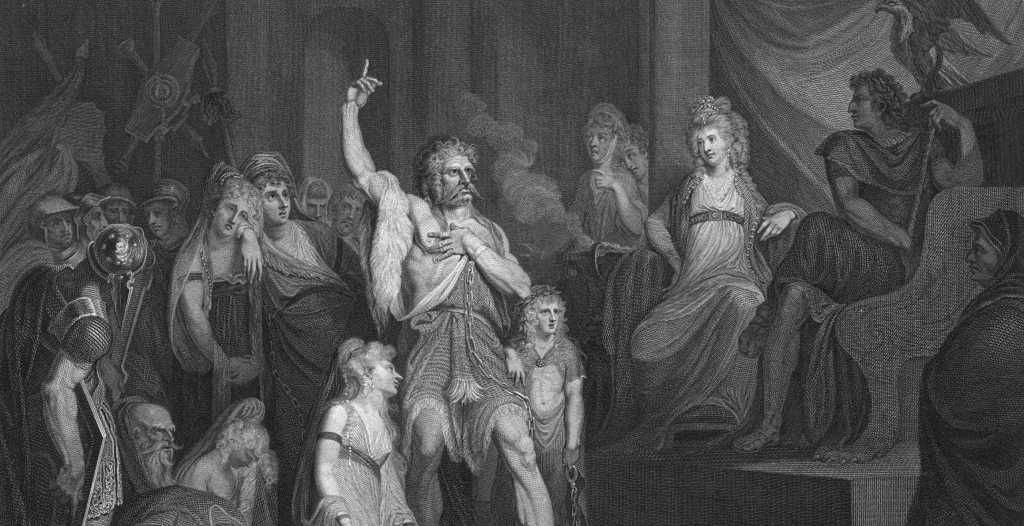
It is likely that Togodumnus died in one of these early engagements, but Caractacus managed to escape, fleeing to southern Wales to continue resistance to Roman rule with the Silures. It was not until 50 AD that Caractacus was decisively beaten and handed to the Romans by the Brigantes (based in modern Yorkshire). A prized captive having led such staunch resistance, he was shipped to Rome to face execution in a triumphal parade. However, in an extraordinary turn of events, following the delivery of a powerful oration to the Roman senate that Claudius and the state showed clemency. The last independent King of the Britains was allowed to see out his days peacefully in the city of Rome.
Caractacus’ defeat was far from the end of conflict in Rome’s most northern province. It would take the next 45 years for the Roman army to fully pacify Britannia, nearly losing it completely during the cataclysmic rebellion of Boudicca during the reign of Nero. Britain would remain under Roman rule for nearly three centuries, leaving an indomitable impression on the island that persists to the modern day.

 LazyHistorian Unknown
Leave a comment